
Influencer Briefing: 7 Things to Include (+Free Template & Examples)
- 13 mins
Picture this: someone hands you a blank page and says, “Create anything.”
Sounds simple, but it’s surprisingly hard to begin.
Now imagine they say, “Sketch a house.”
Suddenly, you have direction, and ideas come much more easily.
That’s how influencer briefs work.
Creators produce their best content when they’re guided, not controlled. If a brief is too strict, the result feels forced. If it’s too open, it can miss the mark. The goal is to find the balance – enough structure to guide, enough freedom to inspire.
A strong influencer brief should:
• Set clear expectations for the collaboration
• Communicate your brand’s voice, message, and tone
• Align everyone around the main objective or KPI
When you get this right, you save time and elevate the quality of the content at the same time.
Need a starting point?
Use our template, customize it for your brand, and you’re good to go.

What is an influencer brief, and why does it matter?
An influencer brief is a short, structured document that outlines everything a creator needs to successfully collaborate with your brand. Done right, it acts as a roadmap, covering:
• Clear direction for the content and any key guidelines
• The objectives you want the campaign to achieve
• Essential brand messaging and product details
• Timelines, communication flow, and expected deliverables
A strong brief makes the entire process smoother for creators. It helps them understand what matters to you and how to present your product in a way that resonates with their audience.
When your briefs are clear and thoughtful, you:
• Elevate the overall quality of content
• Reduce unnecessary back-and-forth
• Come across as organized and professional
7 Key things of an effective influencer brief
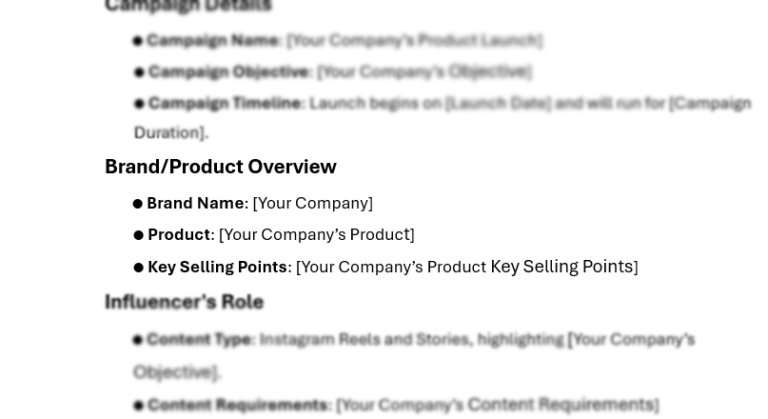
1. Brand & product snapshot
Keep this tight. Your creator doesn’t need your full company history – just the essentials that help them understand what you stand for.
Start with a quick intro, then focus on the “why” behind your brand:
• Why your company exists
• What problem your product solves
• What makes it different from alternatives
Bring in your brand voice and the story you’re trying to tell. Instead of scripting content, show how real customers talk about your product and the results they’ve experienced.
You can also link your media kit or include brand assets like logos here.
2. Campaign overview
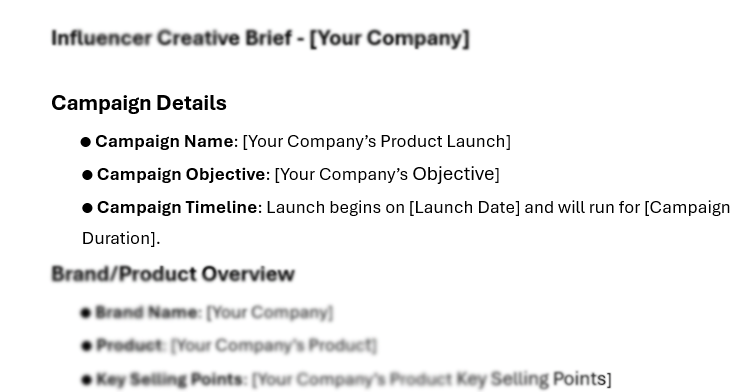
This is your campaign in a nutshell. Think of it as the big-picture context that helps creators understand what they’re part of.
Outline:
• The purpose of the campaign
• Start date (and key milestones if needed)
• Target audience
• Any specific offer or promotion
When creators understand the bigger goal, they’re more likely to approach the collaboration as partners, not just content producers.
3. Timeline & deliverables
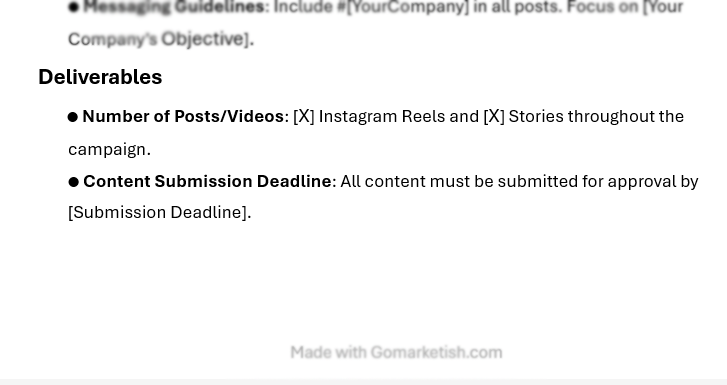
Spell out exactly what’s expected and when. This avoids confusion and keeps everything on track.
Include:
• Number and type of deliverables (e.g. posts, videos, stories)
• Platforms and formats
• Posting window or deadlines
• Draft submission and approval process (if applicable)
Also set expectations around communication. Whether it’s a one-off check-in or regular updates for longer partnerships, clarity here prevents frustration on both sides.
4. Goals & KPIs
Define what success looks like – clearly and simply.
Your KPI should reflect your main goal:
• Awareness → engagement, reach
• Conversions → purchases, sign-ups
Keep it straightforward. Not every creator is fluent in marketing metrics, so avoid jargon where possible. Stick to one primary KPI to maintain focus.
Example:
“Our goal is to drive subscriptions. You’ll receive a unique link and promo code, and success will be measured by the number of sales generated through it.”
Even if you track more metrics internally, simplifying what you share helps creators stay aligned and focused. If helpful, include small tips on how they can improve performance (e.g. strong CTAs, clear promo code placement).
5. Messaging & caption guidance
Help creators nail the story behind the post.
Provide:
• Key talking points or angles
• Required hashtags
• Disclosure reminders (#ad, etc.)
• Promo codes or links
Instead of listing features, frame ideas around benefits and real-life impact.
For example:
❌ “Our mattress adjusts automatically.”
✅ “Our mattress detects snoring and adjusts to help you sleep better.”
You can also suggest hooks, fun facts, or storytelling angles to spark ideas without being overly prescriptive.
6. Visual direction & inspiration
Give creators a sense of direction without boxing them in.
Share:
• Examples of content you like
• A moodboard or general aesthetic
• Past campaign references
If there are must-haves, include them:
• Featuring the product clearly
• Showing your logo
• Ending with a call-to-action
• Incorporating a specific theme or idea
Think of this as guidance, not instruction – you’re pointing them in the right direction while leaving room for their creativity.
7. Payment & contact details
Even if this has been discussed elsewhere, it’s worth reinforcing.
Include:
• Payment process and timing
• Invoicing details
• Point of contact for questions
If rates vary, you can still share general instructions (e.g. where to send invoices) to avoid unnecessary back-and-forth.
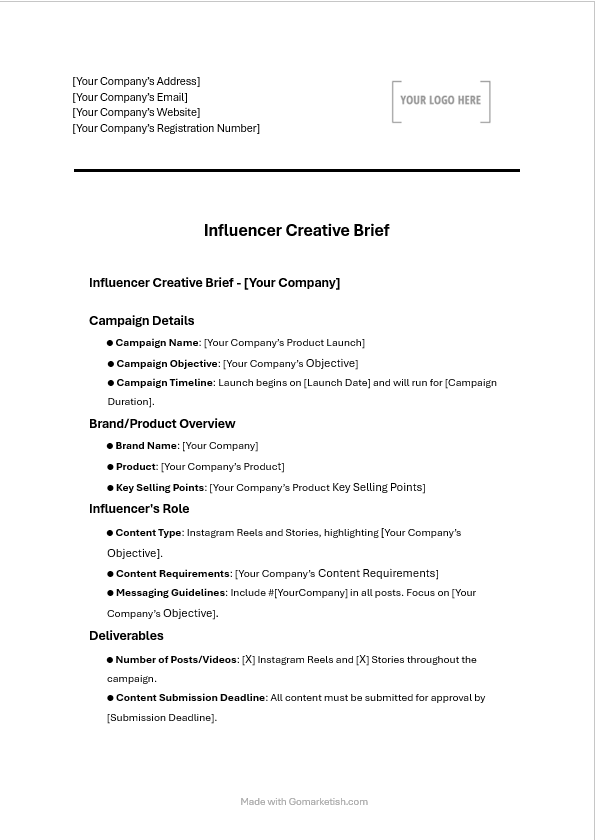
Grab our free influencer brief template
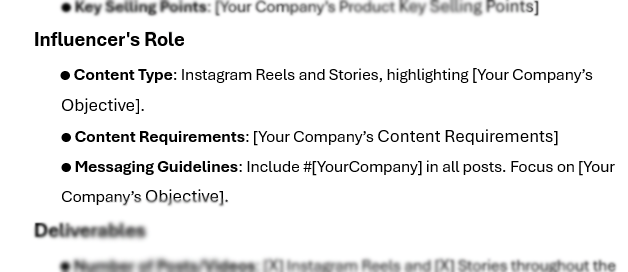
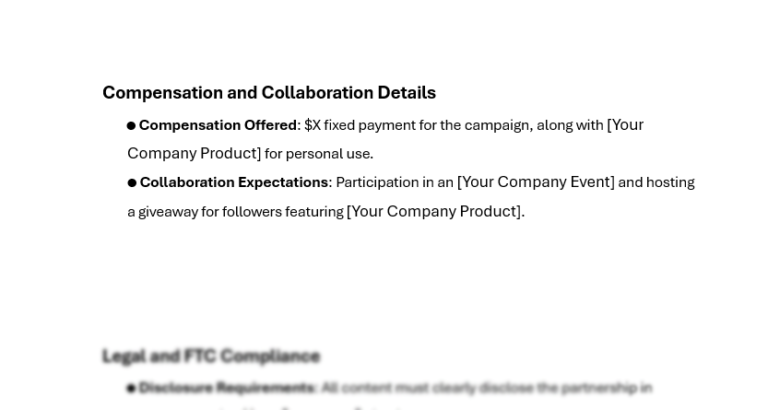
There’s no single “right” way to build an influencer brief. Ours is designed in Google Doc, but the format isn’t what matters – clarity is. Whether you prefer a Google Slides, PDF, email, video, or something else entirely, the goal is simply to communicate the key points in a way that’s easy to understand.
Don’t get caught up in making it perfect. Focus on making it clear.
If you want a faster starting point, use our template. Open it, go to “File,” make a copy, and tailor it to fit your brand.
We Make The Difference.
GoMarketish Team