

AI vs. Humans in Influencer Marketing: 7 Tasks AI Can Help With (and 7 It Can’t)

Influencer marketing doesn’t slow down – it stacks.

On any given week, you’re juggling:

Sourcing and evaluating new creators
Writing thoughtful, personalized outreach
Negotiating rates and deliverables
Managing live campaign conversations
 Coordinating contracts, assets, and approvals across teams

The work moves fast, and the list only grows.

Time is the tightest constraint for influencer marketers. There’s too much manual effort to scale without automation and AI lending a hand.

At the same time, creator marketing is deeply relationship-driven. Over-automate, and collaborations start to feel cold and transactional.

The real opportunity isn’t replacing people with technology – it’s using AI to remove busywork so marketers can spend more time building real creator relationships.

Let AI handle: Influencer discovery

Creator discovery is the top area where marketers want AI to step in.

And it’s easy to see why. Finding the right influencers is one of the most time-consuming parts of the job. Even with influencer marketing platforms, discovery often means toggling between filters like follower count and engagement rate, then manually reviewing profiles to see who actually fits.

That approach still falls short because:

Not every important qualifier can be captured in a filter

Reusing the same criteria leads to the same results – and fewer standout, unexpected creators

That’s where AI-powered discovery changes the game.

With GoMarketish’s AI search, you simply describe what you’re looking for. The tool scans creators’ actual visual content to find influencers who already post about those topics – similar to how a human would evaluate fit, but at scale.

Take this example: you’re marketing a healthy snack brand and want to reach busy moms who talk honestly about feeding their kids when time is tight.

Traditionally, you’d search for mom creators, manually sift through profiles, watch content, and hope to find a few who truly align – after hours of work.

With GoMarketish, you type “moms talking about healthy snacks” into the AI search. Instantly, you get creators who already produce that kind of content. From there, you can refine the list with filters like location, audience size, engagement rate, age, language, and more – so every result fits your criteria precisely.

Want to see it in action? Try GoMarketish’s AI search free for 14 days.

Let AI handle: Putting together the first contract draft

Contracts might not be the most exciting part of influencer marketing, but they’re critical. They protect your brand, set clear expectations, and prevent misunderstandings before a campaign ever goes live.

AI can take the heavy lifting out of the early stages by creating a solid contract draft you can build on with your legal team. By feeding in the key campaign details, you can quickly generate a structured starting point, including:

Creator information

Campaign objectives

Deliverables, timelines, and payment terms

Compensation structure (flat fee, affiliate, gifting)

Content usage rights and duration

Exclusivity clauses, when relevant

⚠️ Worth repeating: AI can accelerate the process, but it can’t replace legal review. Every contract should be approved by a lawyer before it’s sent to a creator.

Many AI tools also come with prebuilt legal templates, making it easy to standardize contracts without starting from zero each time.

AI can also help after the draft is written. Summarizing contracts and pulling out key terms gives both internal teams and creators a fast, high-level view of what matters most – without combing through pages of legal language.

The pattern is clear: AI shines when it comes to speed, structure, and efficiency. But influencer marketing still relies on human judgment to build trust, navigate nuance, and manage relationships.

Up next: the areas of your influencer workflow where AI should stay out of the driver’s seat – and why.

Let AI handle: Measuring creator and campaign performance

Performance reporting is another major drain on marketers’ time.

AI isn’t equipped to own the entire reporting process – only you can connect creator performance to broader business goals and strategy. But it can remove much of the manual effort by surfacing reliable campaign and creator metrics quickly.

With tools like GoMarketish, you get an instant snapshot of campaign performance – views, EMV, clicks, sales, cost, and more, all in one place.

You can also dig deeper into individual creator results to see how each partnership is performing. For teams that want more precision, EMV calculations can be customized to better reflect what success actually means for your brand.

Beyond numbers, many marketers want help understanding the qualitative side of performance. Analyzing comment sections, for example, can reveal how audiences feel about your brand or product. AI tools like Siftsy can scan and categorize sentiment at scale, offering directional insights far faster than manual review – even if it’s not perfectly nuanced.

AI can also play a role in protecting performance data. Code leak detection tools such as Marcode help identify when influencer discount codes appear on third-party sites, reducing fraud and ensuring sales attribution stays accurate.

In short, AI won’t replace your judgment in reporting – but it can dramatically speed up data collection, analysis, and insight discovery.

Let AI handle: Managing influencer content and lists

As influencer programs grow, the operational work multiplies fast. Two areas in particular tend to spiral:

Collecting every piece of content creators publish about your brand

Organizing creators across multiple campaigns and initiatives

Many marketers now rely on AI-powered tools to handle this scale. With platforms like GoMarketish, you can automatically pull in influencer content tied to specific hashtags, brand mentions, or keywords – including Instagram Stories. You can also collect everything a creator publishes and selectively track the posts that matter for each campaign.

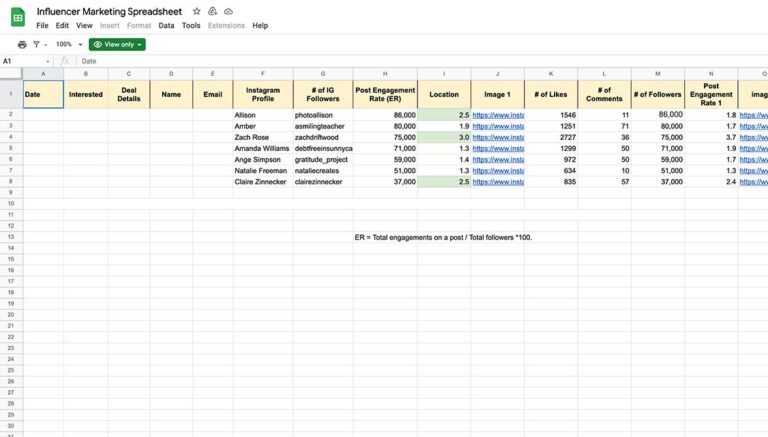
Creator management is another area where automation pays off. Instead of juggling spreadsheets, teams can track relationship stages in one centralized system, including:

• Creators you’ve contacted

• Creators awaiting follow-up

• Creators scheduled for product seeding

• Creators whose content needs approval

• And every step in between

Within GoMarketish, these stages are fully customizable, making it easy for teams to stay aligned and keep campaigns moving.

For even tighter tracking, you can connect your Shopify store to view each influencer’s unique links and discount codes directly alongside their profile – all in one place, without tab-hopping.

Let AI handle: Perfecting influencer briefs and content outlines

Creating influencer briefs and written assets is where most marketers already lean on AI.

From briefs to captions to scripts, AI has become the go-to support for producing campaign materials quickly and consistently. And it makes sense – this part of the workflow is highly repeatable, yet traditionally time-intensive.

AI helps reduce friction by turning briefs into templates you can reuse across creators and campaigns. With the right inputs, AI can:

Draft a creator brief using your product details, brand voice, key messages, and deliverables

Condense your campaign strategy into a creator-friendly summary

Translate briefs for international or multilingual campaigns

Of course, every brief still needs a human review to ensure accuracy and brand alignment. But once refined, AI makes it much easier to produce high-quality briefs at speed – without sacrificing consistency.

Beyond briefs, AI can also support the creative process. It’s useful for generating early ideas, suggesting talking points, outlining scripts, or drafting caption concepts. When momentum stalls, AI works well as a creative springboard – giving you something to react to, refine, and build on.

Let AI handle: Influencer outreach and other communication templates

Influencer outreach is one of the most common areas where marketers turn to AI.

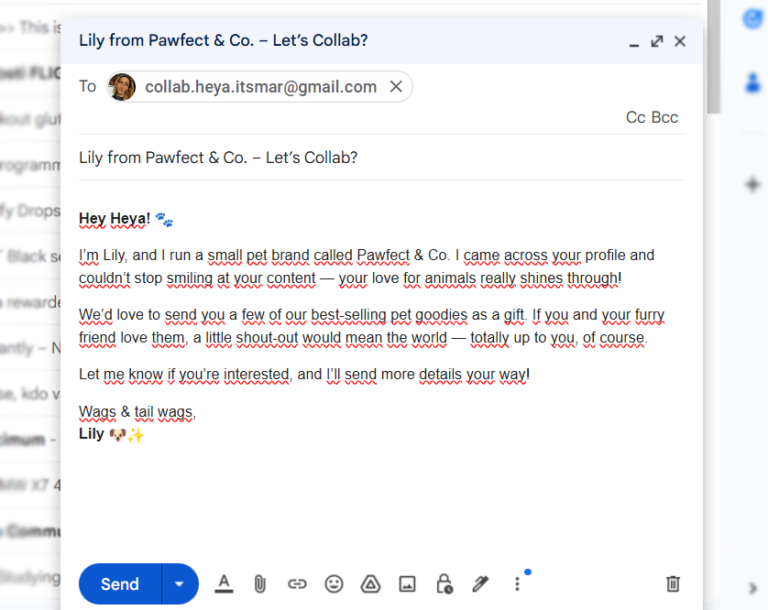
When you’re contacting dozens of creators each day, a large portion of every message stays the same – brand context, campaign details, timelines. AI can help polish and standardize those repeatable sections, so you’re not rewriting them from scratch every time.

AI can also support personalization by quickly gathering context about a creator. By scanning a creator’s content, recent projects, or public appearances, AI can surface details that help your outreach feel informed and relevant – not generic.

⚠️ Important: Always verify AI-generated information before using it. Accuracy matters, and AI can get details wrong.

Beyond first outreach, AI is useful for creating message templates you send on a recurring basis. Performance updates for affiliates, monthly check-ins, or campaign summaries can all be templated and reused with minimal effort.

AI can also help draft follow-up messages when replies stall. Paired with automation tools like GoMarketish, follow-ups can even be scheduled and sent automatically at specific dates and times – no manual reminders required.

All outreach activity can be tracked in one place, giving you visibility into when you first contacted a creator, followed up, received a response, and moved the relationship forward.

And when email threads get long and messy, AI can step in to summarize conversations and pull out key details, saving you from rereading entire chains.

Let AI handle: Fraud detection and brand safety checks

Fraud detection and brand safety checks are one of the most practical places for AI to add value in influencer marketing.

Manually vetting creators for fake followers, engagement pods, or risky content takes time – and it’s easy for red flags to slip through when you’re under pressure to launch. AI helps reduce that risk by scanning large volumes of data quickly and consistently.

AI tools can help you:

Analyze audience quality and flag suspicious follower growth or engagement patterns

Identify potential fraud signals like bot activity or inflated metrics

Scan past content for brand safety risks, controversial topics, or misaligned values

Monitor creators over time for sudden changes that could impact campaign safety

While AI can surface risks faster than manual reviews, it shouldn’t be the final decision-maker. Always pair automated checks with human judgment to understand context and nuance.

Used correctly, AI makes creator vetting more efficient and consistent – helping teams protect their brand without slowing down campaigns or overburdening their workflow.

Don’t use AI for: Influencer communication

We’ve all come across those painfully obvious AI-written comments on LinkedIn – the kind that feel hollow and instantly forgettable. Creators pick up on the same signals just as quickly.

If your communication with influencers sounds automated, it won’t land well. Whether you’re answering a quick question or working through contract details, relying on AI to respond for you can make interactions feel cold and transactional.

Creators don’t want to feel like entries in a CRM. A generic, machine-polished reply can undo trust and authenticity faster than almost anything else.

At the end of the day, influencer marketing is built on relationships. When a real person reaches out, they expect a real person on the other side of the conversation.

Don’t use AI for: Evaluating and providing feedback on influencer work

AI can help surface performance metrics, but feedback should never be one-size-fits-all – especially with long-term creator partners.

Thoughtful, personalized feedback does more than strengthen the relationship. It helps creators understand what’s working, what isn’t, and how to improve future content for your brand. That upfront investment pays off by reducing revisions, speeding up approvals, and ultimately lightening your workload over time.

AI-driven content analysis can support the process, but it won’t tell the whole story. Algorithms can’t fully grasp what stops the scroll, sparks emotion, or drives purchasing behavior – and they certainly don’t understand your brand’s nuances.

Use AI as an input, not a replacement. Your judgment, intuition, and experience are still the most important signals when guiding creator performance.

Don’t use AI for: Sending AI-drafted contracts without legal approval

Sending a contract to a creator without proper legal review is a risk you don’t want to take – especially if that contract was generated by AI.

AI tools don’t reliably account for jurisdiction-specific regulations, legal nuance, or the precise language required to make a contract enforceable. While you can prompt for certain legal terms, there’s no guarantee the output will be accurate, complete, or compliant.

AI can be useful for drafting a starting point, but it should never be the final step. Every contract needs approval from your legal team before it reaches a creator.

Put simply: if you wouldn’t trust AI to handle an important email without review, it makes even less sense to rely on it for a binding legal agreement.

Don’t use AI for: Evaluating creators qualitatively

AI tools can quickly help you shortlist creators based on measurable criteria – follower count, engagement rate, audience demographics, and more. But numbers only tell part of the story. To determine if a creator is truly the right fit for your brand, you need to evaluate them qualitatively. That means asking questions like:

Do their sponsored partnerships feel authentic and natural within their content?

Does their content align with your brand guidelines and standards?

Do their personality and values resonate with your brand identity?

While AI could make this process faster, speed comes at a cost. AI lacks the intuition and contextual understanding humans bring – it can’t judge whether content is high-quality, engaging, or truly aligned with your brand.

AI should support your selection process, not make the final decision.

Don’t use AI for: Using fully AI-written captions or scripts

Using AI to brainstorm post ideas, captions, and scripts can be a huge time-saver – but never use AI content exactly as-is without reviewing and refining it.

AI is a helpful partner for generating ideas or drafts, but the final creative output must remain human. Authenticity is what connects your audience to your brand, and AI-generated copy often feels generic, impersonal, or off-brand. For example, captions that haven’t been human-reviewed can immediately turn off readers, erode trust, and create negative impressions with potential customers.

Think of AI as a tool for inspiration and efficiency, not a replacement for the creative process. Let it help you refine content, spark ideas, or outline scripts – but always put the human touch on the final version to ensure it feels genuine, relatable, and on-brand.

Don’t use AI for: Mass messaging to creators

Mass influencer outreach works in some cases. For most campaigns, sending AI-generated messages as your first touch can backfire. It risks starting the relationship on the wrong note and can even harm your brand’s reputation.

Personalization is key. Taking the time to reference an influencer’s content, highlight something you genuinely admire, or show that you’ve done your research sets you apart. While AI can handle the repetitive parts – like your brand description, campaign details, or call-to-action – the section that speaks directly to the creator should always come from you.

Anyone can generate a generic message with AI, but no one can speak like you. That human touch is what builds trust and lasting partnerships.

Don’t use AI for: Negotiating rates and expectations

Negotiation is a human skill. Every influencer is different, and discussions around rates, deliverables, or exclusivity require nuance, empathy, and judgment that AI simply can’t replicate. Sending an AI-generated proposal or counteroffer can come across as impersonal or even tone-deaf, which can damage trust before the partnership even begins.

Use AI to help organize the numbers or draft reference materials – for example, creating a table of proposed rates, previous campaign benchmarks, or standard terms – but leave the actual conversation to a human.

The key is this: influencers respond to people, not machines. Your ability to read cues, adjust tone, and find mutually beneficial solutions is what turns outreach into a long-term, successful collaboration.

Negotiation is relationship-building in disguise – and that’s something AI can’t touch.

Let AI handle the tasks, humans handle the relationships

If you had to boil it down, the rule is simple: let AI handle repetitive, administrative tasks, but keep the human touch for anything that requires judgment, creativity, or relationship-building.

Whenever you’re interacting with people – whether it’s writing captions, messaging creators, or negotiating partnerships – AI should never replace your voice. Authenticity matters, and your audience and influencer partners can tell the difference.

On the other hand, tasks that are tedious, repetitive, or time-consuming – like updating spreadsheets, collecting influencer content, or tracking campaign performance – are perfect for AI. Using it here frees up your energy for the work that truly matters.

AI can transform the way you work. It speeds up reporting, organizes your workflow, surfaces insights faster, and reduces hours of administrative labor. But it’s also a reminder that influencer marketing is still about creativity, intuition, and human relationships – things no tool can replicate.

For areas where AI adds real value – influencer discovery, content management, and performance tracking – tools like GoMarketish help you work smarter while keeping the human touch front and center.

We Make The Difference.

GoMarketish Team

We are on social media too.

GoMarketish Logo
Copyright© 2026 GoMarketish, All rights reserved.

[affiliate_name]

We understand that sometimes plans change. Your feedback and support have meant a lot to us, and we truly appreciate the time you’ve spent with our service.

If there were specific reasons behind your decision to cancel, we would love to hear from you as your insights help us improve. Our dedicated support team is available to ensure your transition is smooth and hassle-free.

Thank you for being a part of our community, and we hope you’ll consider returning in the future.